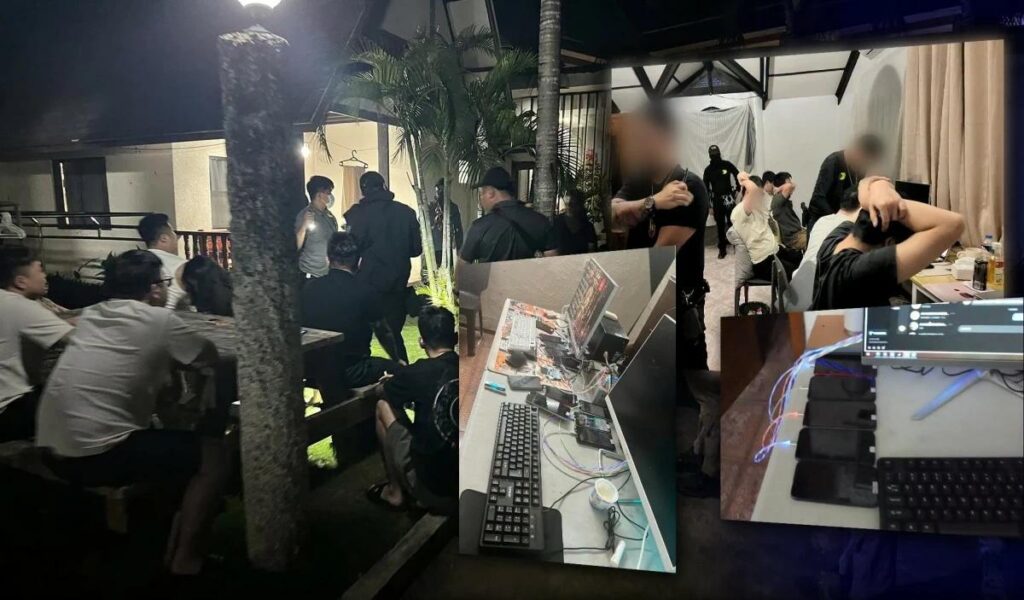
An alleged transnational fraud operation that used fake online identities and romantic relationships to lure victims into fraudulent investments was dismantled by joint operatives from the Presidential Anti-Organized Crime Commission (PAOCC), National Bureau of Investigation (NBI) and the Philippine Amusement and Gaming Corp. (PAGCOR), with preliminary digital evidence pointing to transactions exceeding $10 million.
The PAOCC, in coordination with the NBI and PAGCOR, arrested 31 individuals during operations in Panglao and Dauis, Bohol on Nov. 10 and 11.
The raids covered four interconnected locations and were led by the NBI’s Chemical, Biological, Radiological, Nuclear, Explosives and Foreign Malign Influence Unit (NBI-CFMIU), with support from the NBI Bohol District Office, PAOCC, and intelligence authorities.
The operations were conducted under Warrants to Search, Seize and Examine Computer Data (WSSECD) issued by a Regional Trial Court in Lapu-Lapu City.
Initial investigation showed that the group allegedly used fabricated online identities and romantic relationships to gain the trust of prospective victims before offering them fraudulent investment opportunities.
Authorities seized hundreds of computers, mobile phones, SIM cards, Starlink communication equipment, financial records, and messaging scripts allegedly used to communicate with targets and persuade them to invest through cryptocurrency and other financial channels.
Preliminary digital forensic examinations uncovered financial dashboards, transaction records, and ledgers indicating an estimated amount exceeding $10 million, although investigators said the figure remained subject to verification.
Investigators also recovered communications from a purported investor who complained about being unable to withdraw funds, suggesting that victims may have been deliberately prevented from accessing their investments.
The alleged scheme targeted Filipinos and foreign nationals, including Spanish citizens, indicating that the operation had an international reach.
Of particular concern to investigators were possible links to scam operations previously uncovered in Cambodia. Immigration records and recovered documents showed that several individuals had traveled to or stayed in the Southeast Asian country.
Investigators also reportedly established that an address linked to a recovered Cambodian identification document had been raided previously by Cambodian authorities over alleged scamming activities.
The findings raised concerns that scam syndicates displaced by law enforcement operations in other Southeast Asian countries could be transferring their activities to the Philippines.
PAOCC Executive Director Undersecretary Benjamin Acorda Jr. said authorities would pursue not only those who directly handled the scams but also the individuals financing and organizing them.
“Criminal syndicates may change their locations, their identities, and their methods, but we cannot allow the Philippines to become their safe haven. We will pursue not just those directly carrying out these scams, but also the organizers, financiers, and facilitators who keep these operations running,” Acorda said.
The 31 arrested individuals were presented for inquest proceedings, with prosecution recommended for alleged violations involving social engineering and economic sabotage under the Anti-Financial Account Scamming Act, in relation to the Cybercrime Prevention Act of 2012.
The NBI also referred the matter to the Bureau of Immigration for verification and appropriate immigration proceedings.
The country has intensified operations to dismantle cyber-enabled fraud networks, including illegal Philippine Offshore Gaming Operators (POGO) operations and scam hubs that use digital platforms to target victims across borders.