The Philippines and Japan signed a three-year agreement to develop strategic petroleum reserves in the country, a move aimed at insulating local consumers and industries from global oil supply disruptions.
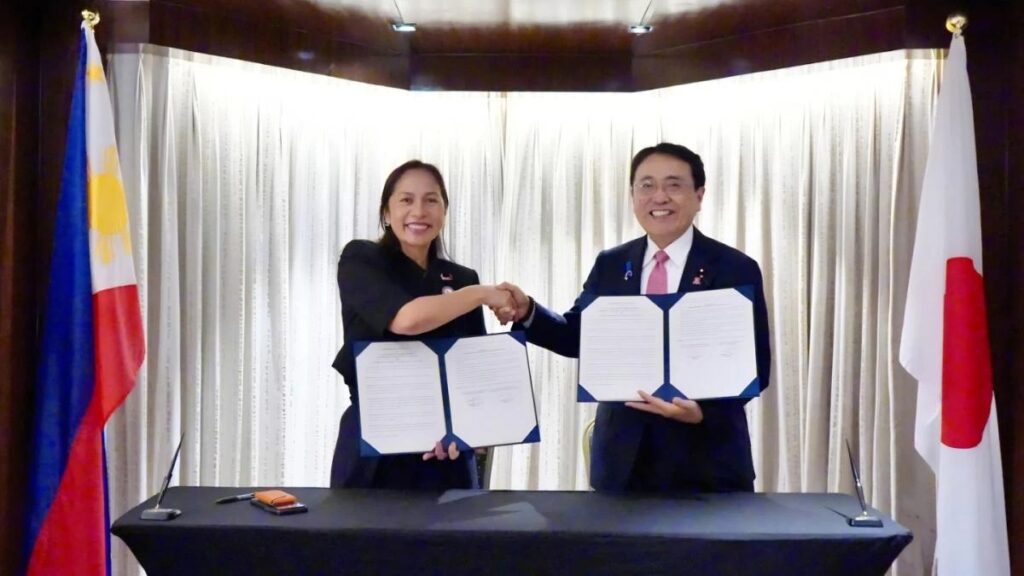
Energy Secretary Sharon Garin and Japanese Minister of Economy, Trade and Industry Ryosei Akazawa inked the memorandum of cooperation on Nov. 16, establishing a framework to build, manage, and release emergency fuel stockpiles tailored to Philippine market conditions.
The pact builds on commitments made by the two nations’ leaders in May to strengthen regional oil stockpiling cooperation amid heightened geopolitical risks in the Middle East.
“As long as it benefits our people, then the Philippines is willing” to partner on initiatives that bolster supply security, Garin told reporters at a briefing on Tuesday.
In a separate statement, she noted that establishing strategic reserves will equip the country with the systems, infrastructure, and institutional capacity required to protect domestic fuel supplies during emergencies.
Like Japan, the Philippines relies on the Middle East for more than 90 percent of its crude oil imports, leaving its economy vulnerable to shipping bottlenecks such as disruptions along the Strait of Hormuz.
Manila declared a national energy emergency in March as Middle East tensions escalated, and its inventories stood at just 53 days of domestic consumption as of May, compared with Japan’s combined public and private reserves of 207 days.
The Philippine government aims to begin constructing national oil storage facilities in 2027, targeting an additional 15 million barrels—or roughly 30 days of demand.
Under the new accord, Manila and Tokyo will explore constructing storage facilities guided by ongoing feasibility studies to identify viable financing mechanisms.
The agreement also opens the door for Japanese companies to participate in commercial stockpiling ventures led by state-run Philippine National Oil Co.
Technical assistance will draw on existing programs from the Japan Organization for Metals and Energy Security, the Japan International Cooperation Agency, and the Economic Research Institute for ASEAN and East Asia. Those efforts will target policy formulation, oil security assessments, capacity building, and knowledge transfer.
The bilateral deal further advances broader regional energy resilience under the Partnership on Wide Energy and Resources Resilience Asia framework, including drafting a regional financing roadmap and exploring voluntary arrangements with crude-producing nations.
The three-year cooperation period will formally take effect once both governments complete domestic procedures and exchange diplomatic notifications, with an option to extend by mutual consent.