The Department of Agriculture (DA) is pushing for amendments to the Rice Tariffication Law (RTL) while tightening rice import monitoring in a bid to give locally produced rice a better chance of competing with imported varieties.
DA seeks stricter rice import rules to protect local farmers
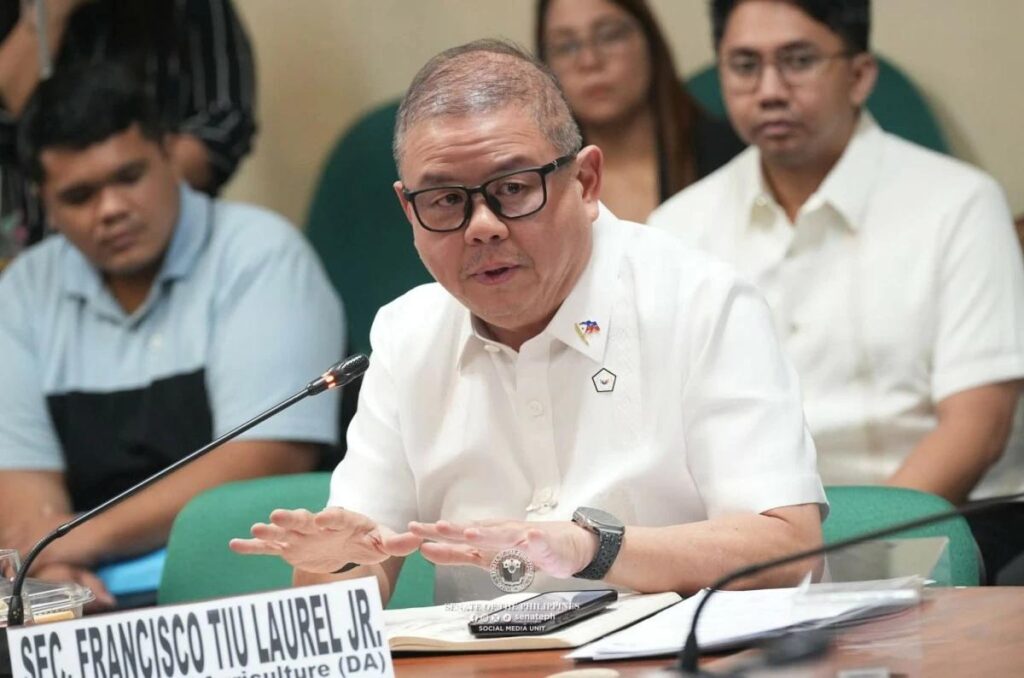
During a hearing of the Senate Committee on Agriculture, Food, and Agrarian Reform, DA Secretary Francisco Tiu Laurel Jr. told senators on Friday, Nov. 20, that the agency had secured a gentlemen’s agreement with industry stakeholders to discourage the importation of premium rice with only 5 percent broken grains in favor of varieties containing 25 percent broken grains.
The arrangement came after consultations with rice millers and importers who raised concerns over the difficulty of competing with premium Vietnamese rice, particularly the DT8 variety.
Tiu Laurel recalled that a miller from Villasis, Pangasinan, even jokingly suggested that imported rice should be comparable to the locally produced “Miss Villasis” rather than the Vietnamese “Miss Universe” variety.
“I said I cannot make that a policy now because we are under the RTL,” said Tiu Laurel, noting that an amendment to the law would be necessary to institutionalize the proposed import standard.
He emphasized that rice imports with 5-percent broken grains remain permissible under current regulations, stressing that the agreement is voluntary and does not constitute an official import restriction.
Separately, the DA has introduced stricter requirements for the issuance of Sanitary and Phytosanitary Import Clearances (SPSICs).
Tiu Laurel said he instructed the Bureau of Plant Industry (BPI) to require rice importers, beginning Nov. 1, to submit copies of their purchase contracts alongside their permit applications.
The measure aims to ensure that importers honor their delivery commitments and enable the government to monitor shipment schedules, particularly during local harvest periods when an influx of imported rice could drive down farmgate prices.
Meanwhile, Senator Francis “Kiko” Pangilinan challenged former DA Secretary Leonardo Montemayor to present documentary evidence of an alleged separate import clearance for a shipment of 25-percent broken rice from Vietnam.
The issue stemmed from claims by the Federation of Free Farmers (FFF) that the shipment had a separate SPSIC from the 5-percent broken rice shipment previously canceled by Tiu Laurel.
When asked about the alleged permit, Montemayor pointed to media reports, including those by broadcaster Ted Failon, but failed to produce a copy of the document.
“Unless you have the copy of the 25 percent broken SPSIC, then it supports your allegation,” Pangilinan said, emphasizing the need for documentary evidence to establish that two separate permits had been issued.
The controversy concerns more than 12,000 metric tons of Vietnamese rice that arrived in Davao on Sept. 10.
Pangilinan led the hearing on the attempted illegal entry of about P700 million worth of smuggled Vietnamese rice into the ports of Davao and Bataan in September.
He stressed that agricultural smuggling is not merely a revenue and law enforcement concern but a serious threat to the livelihood of Filipino farmers and the country’s food security.
He earlier flagged two incidents of attempted rice smuggling operations in September during a DA budget hearing, and vowed to open a formal investigation into what he warned was a recurring pattern of government agencies allowing the entry of imported agricultural goods during the local harvest season.
The DA’s 60-day rule dictates that agricultural products must leave the port of origin within 60 days and that their release cannot coincide with the local harvest season to protect farmers from price drops.