Fresh funding, weapons access, and technology partnerships from the United States were expected to feed into the Armed Forces of the Philippines’ (AFP) modernization program as it welcomed new American commitments announced during the recent visit of President Donald Trump in Manila.
In a statement Friday, Nov. 20, the AFP said it viewed the latest US support as a contribution to ongoing efforts to strengthen the country’s defense posture.
“We appreciate the continued support of the United States in strengthening the AFP’s capabilities,” the AFP said.
“These forms of assistance contribute to our ongoing modernization and efforts to develop a credible defense posture,” it added.
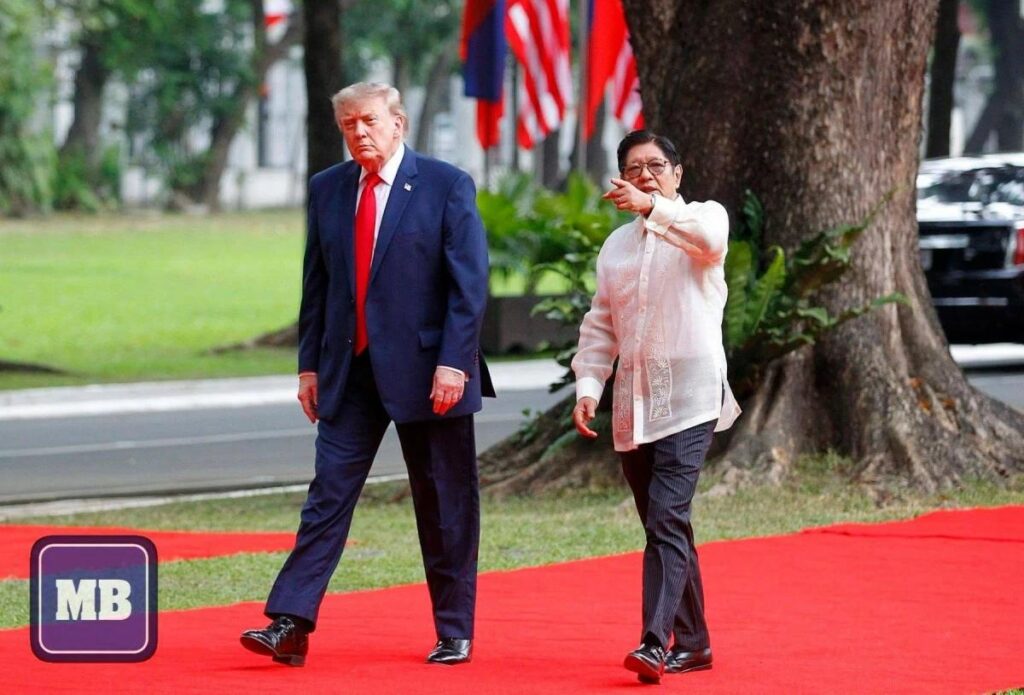
During his meeting with President Marcos Jr. at the Malacañan Palace last Wednesday, Nov. 18, Trump disclosed that Washington had approved more than $5 billion worth of arms sales and increased foreign military financing for the Philippines since he assumed office.
Trump cited efforts to accelerate deliveries of military equipment through expanded US defense production, including advanced systems such as Patriot missile batteries and the Terminal High Altitude Area Defense (THAAD) system.
The AFP has recently placed greater emphasis on deterrence systems, command-and-control networks, missile capabilities, maritime security, cyber defense, and joint operations across land, air and sea domains in its ongoing modernization program.
A major component of the package involves a proposed Foreign Military Financing loan arrangement worth more than $2 billion that would allow Manila to acquire defense and security equipment from US suppliers, according to a fact sheet released by the White House on its official website.
Washington also earmarked $400 million in military financing intended to help expand the Philippines’ operational reach and deterrence capability in the South China Sea, including support for long-range fires, command-and-control systems, critical infrastructure and multi-domain drones.
The defense package formed part of a wider set of agreements announced during Trump’s state visit. Among them was a $12-billion commitment by Philippine Airlines for up to 20 Boeing 787 aircraft equipped with GE Aerospace engines.
The two governments also agreed to pursue cooperation in critical technologies, including sovereign cloud infrastructure, artificial intelligence-enabled defense systems, and civil nuclear technology.
According to the White House, the Department of National Defense (DND), headed by Defense Secretary Gilberto Teodoro Jr., also announced a $37-million contract with a US company for mission-support systems designed to improve interoperability between Philippine and American forces.
Another initiative worth $63 million would modernize the defense department’s cloud infrastructure to support emerging technology applications, the White House added. Communications and strategic infrastructure were likewise included in the discussions.
U.S.-based Astranis also offered connectivity services through its AGILA satellite to provide secure communications capability for government and civilian users in the Philippines.
The two countries also discussed infrastructure projects, including the construction of a fuel storage depot in Subic Bay and the modernization of Basco Airport in Batanes which are expected to support disaster response, logistics, and operational access in the country’s northern frontier, the White House said.
The AFP clarified that any purchase would remain subject to government procedures.
“Any acquisition undergoes the appropriate assessment and procurement processes based on our operational requirements and national defense priorities,” it said.