Malacañang said the United States would be only one of the Philippines’ possible sources of agricultural products and energy, and assured that any trade arrangement with Washington would not harm local farmers, fishermen, and producers.
Presidential Communications Office (PCO) Undersecretary Claire Castro made the clarification after US President Donald Trump claimed that the Philippines had agreed to purchase 100 percent of its agricultural products and energy requirements from the United States beginning Jan. 1.
In a video message on Sunday, Nov. 22, Castro said the US was being considered as an additional supplier as the administration seeks to diversify the country’s sources of essential commodities and secure more affordable supplies.
“Kaya ang bansang US ay isang option na maging source ng mga produktong kakailanganin natin sa hinaharap (The United States is therefore one option as a source of the products we may need in the future),” she said, describing the deal as a “victory for the country.”
The Palace Press Officer emphasized that the administration would protect domestic producers in any transaction it enters into with Washington.
“Ang anumang transaksyon na papasukin ng pamahalaan ni Pangulong Marcos Jr. ay sisiguraduhin na hindi magbibigay ng negatibong epekto sa sarili nating mga produkto at sa ating mga magsasaka at mangingisda (The Marcos administration will ensure that any transaction it enters into will not negatively affect our own products, farmers, and fishermen),” she said.
Castro said expanding the country’s supplier base would help secure food and energy supplies while easing inflationary pressures through access to more competitive prices.
“Mas maraming source, mas mababang presyo. Mas maraming source, mas madaling maibsan ang pagtaas ng inflation rate. Mas siguradong food and energy supply (More sources mean lower prices. More sources make it easier to ease inflation. Food and energy supplies become more secure),” she said.
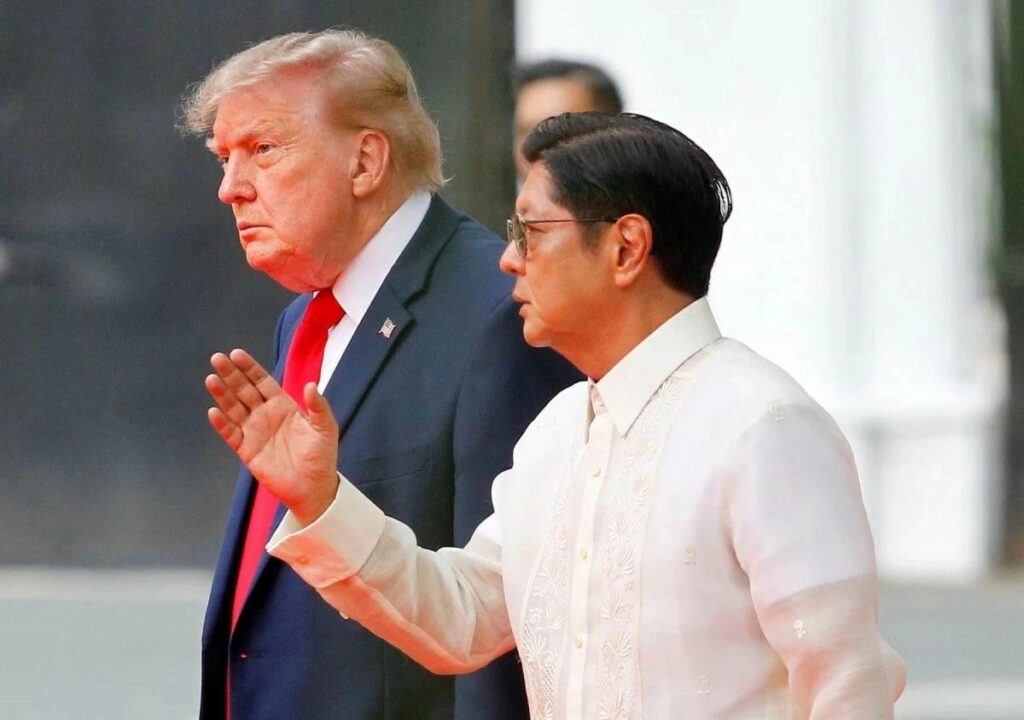
Her statement came after Trump said at a White House briefing that he had directed the Philippines to buy all its agricultural products from American farmers instead of sourcing them from countries such as Brazil.
“You buy 100 percent of your agriculture from January 1st from our farmers,” Trump said, recounting his conversation with Philippine officials.
He also claimed that the Philippines would stop buying energy from the Middle East and source all its requirements from the United States, warning: “And if they don’t, then they have problems.”
The White House fact sheet on Trump’s state visit to Manila, however, described the commitment as increased Philippine imports of American agricultural products and energy, saying the two countries aimed to eliminate the US trade deficit through these purchases.
It did not specify that the Philippines had agreed to source 100 percent of its food and energy requirements from the United States.
Middle East crisis, El Niño cited
Castro said the administration’s efforts to secure additional suppliers were prompted partly by the risk of energy supply disruptions amid the Middle East crisis.
She said President Marcos had instructed Department of Energy (DOE) Secretary Sharon Garin to ensure sufficient oil supplies so that businesses and households would not be disrupted.
The Palace official also cited the threat of a very strong El Niño, saying Marcos had directed Department of Agriculture (DA) Secretary Francisco Tiu Laurel Jr. to prepare for possible shortages by arranging imports of agricultural products that could be affected by the weather phenomenon.
Castro stressed that the country currently has sufficient food supplies but said the government wants to prevent shortages if El Niño intensifies.
Other deals announced
The White House fact sheet also listed several other agreements and commercial arrangements announced during Trump’s visit, including a $12-billion sale by Boeing and GE Aerospace to Philippine Airlines for up to 20 Boeing 787 aircraft.
It also cited a proposed US Foreign Military Financing loan package worth more than $2 billion for Philippine defense acquisitions, as well as $400 million in military financing for capabilities intended to strengthen the country’s operational reach and deterrence in the South China Sea.
Other initiatives include cooperation on Philippine defense cloud infrastructure, exploration of an intergovernmental agreement on civil nuclear technology, satellite connectivity services valued at up to $200 million, and a $ 40 million fuel storage depot in Subic Bay.
The White House said the agreements were intended to strengthen the US-Philippine alliance, expand opportunities for American companies, and support US jobs.
Castro said the discussions between Marcos and Trump focused on accelerating efforts to ensure more reliable food and energy supplies for Filipinos.
“Ang napag-usapan ng dalawang bansa ay pabilisin ang pagkilos tungo sa mas siguradong supply ng pagkain at enerhiya para sa mga Pilipino (What the two countries discussed was accelerating efforts toward more secure food and energy supplies for Filipinos),” she said.