Total approved investments facilitated by the Philippines’ three leading investment promotion agencies (IPAs) increased by nearly two-fifths to ₱1.4 trillion in the first nine months of 2026, led by stronger commitments in renewable energy (RE), manufacturing, and economic zones.
Of the IPAs, the Board of Investments (BOI) accounted for the lion’s share, with approved investments rising 22.3 percent to ₱942.9 billion at end-September from ₱770.7 billion in the same period last year, the Department of Finance (DOF) said in a statement on Friday, Nov. 13.
This was followed by the Philippine Economic Zone Authority (PEZA), whose commitments surged by more than three-fourths to ₱309.6 billion from ₱175.4 billion in 2025.
Meanwhile, state-run Bases Conversion and Development Authority (BCDA) logged the fastest growth, with investment approvals more than doubling to ₱145.5 billion from ₱60 billion.
The DOF statement quoted Department of Trade and Industry (DTI) Secretary Cristina A. Roque as saying that the combined performance reflects continued confidence among foreign and domestic investors in the Philippine economy.
Hitting ₱1.4 trillion in approved investments within nine months reflects business confidence in the country’s economic fundamentals and policy direction, Roque said, adding that the government’s approach to attracting investments seeks to firm up supply chains, support local businesses, and generate jobs.
Similarly, DOF Secretary Frederick D. Go said the investment commitments could create broader economic benefits through job generation, expanded business opportunities, and higher government revenues.
“These approvals are real gains because every investment brings an entire ecosystem of employers, workers, suppliers, and service providers,” Go said. “Businesses will grow, wages will be paid, the government will earn revenues, and public services will be funded. It is a win for the investor, the workforce, and the nation.”
RE accounted for the largest share of BOI-approved investments, totaling ₱745.1 billion, or nearly four-fifths of the three IPA’s overall approvals as of end-September.
Real estate and housing ranked second with ₱54.1 billion, representing 5.7 percent of total, followed by transportation and storage with ₱49.5 billion, or 5.3 percent.
Accommodation and food service activities contributed ₱22.1 billion, while information and communications accounted for ₱18.6 billion.
Accounting for a tenth of total approvals, BCDA attributed its nine-month investment approvals to major commitments in RE, manufacturing, hospitality, and tourism, which are expected to generate nearly 9,000 jobs across its development areas.
A proposed solar cell manufacturing facility at Filinvest Innovation Park in New Clark City accounted for the largest commitment at ₱93.7 billion. Investments in hospitality and tourism reached ₱1.8 billion, supported by projects in Camp John Hay in Baguio City and Bonifacio Global City (BGC) in Taguig City.
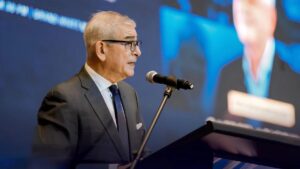
Outgoing BCDA President and Chief Executive Officer (CEO) Joshua M. Bingcang said the increase reflects investor confidence in the long-term potential of the IPA’s economic zones. Bingcang has been appointed by President Ferdinand R. Marcos Jr. as the new director general of PEZA.
Bingcang cited clean energy manufacturing in New Clark City and tourism and commercial developments in Baguio and Taguig as among the areas attracting capital.
BCDA also cited ongoing infrastructure developments supporting the Luzon Economic Corridor (LEC), particularly improvements in regional connectivity and logistics networks linking Central Luzon to Metro Manila and international markets.
Among the deals signed during the period were investments involving Ayala-led Station Square East Commercial Corp., Stern Real Estate and Development Corp., Anrey Inc., Zoo and Theme Parks Services Inc., and Grace Farm Nature and Resort Corp.
Efforts to promote investments align with Marcos’ infrastructure development agenda and ease-of-doing-business reforms, which seek to attract high-value industries and encourage private-sector investments. – Derco Rosal