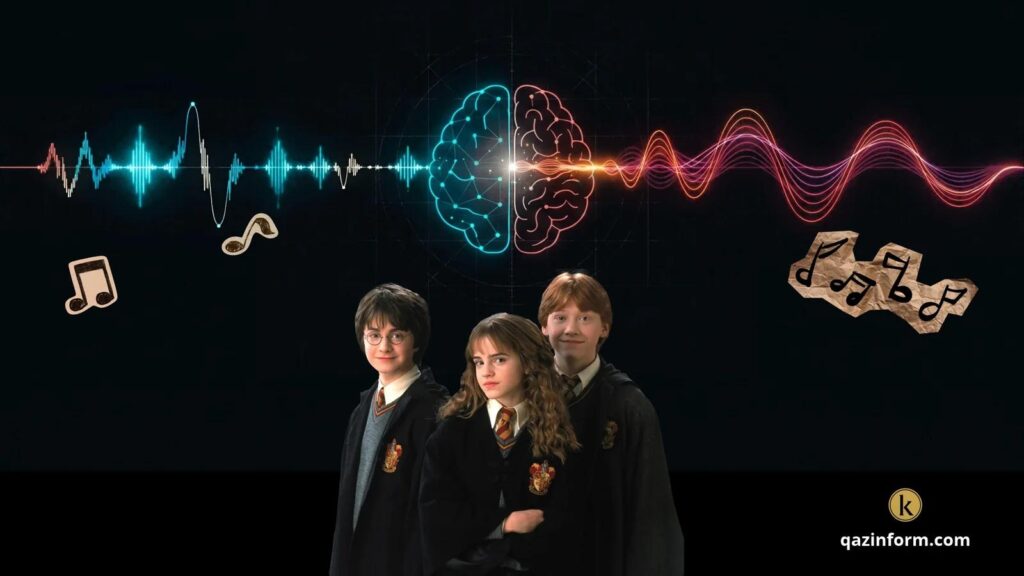
Using a Harry Potter film soundtrack, researchers found that rapid changes in sound were the clearest clue to when listeners heard speech, while fine detail across frequencies was the strongest clue to when they heard music, Qazinform News Agency correspondent reports.
The study appeared in Science Advances on November 18. Jérémie Ginzburg of McGill University’s Montreal Neurological Institute and colleagues at Laval University in Canada and Aix-Marseille University in France used nearly eight minutes of audio from the French-dubbed version of Harry Potter and the Philosopher’s Stone. The clip allowed them to study what happens when dialogue and music overlap, as they often do in everyday life.
Eleven patients with epilepsy listened to the clip while researchers recorded their brain activity through electrodes already in place for medical reasons. A separate group of 19 adults listened to the same recording and pressed buttons to indicate when they heard speech, music or both. This gave the team two records of the same scene. One showed how the brain responded as the soundtrack played. The other showed what listeners heard at each point.
The researchers identified 39 sites on the two sides of the brain where activity followed changes in the soundtrack. They used the signals from each site to reconstruct some of the sound’s features, then tested how well those features predicted the listeners’ responses. The models were 54% to 60% accurate for speech and 54% to 71% accurate for music. The chance level for each was 50%.
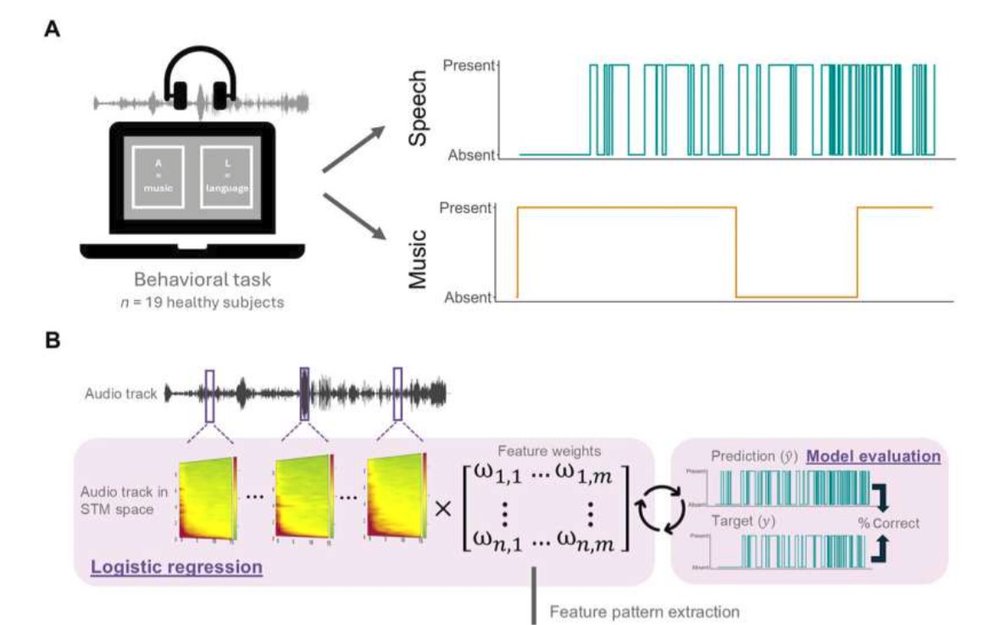
When the models analyzed the soundtrack directly, accuracy rose to 97% to 99% for speech and 99% to 100% for music. The researchers also tested a recording that mixed speech with organ music. Because the team had put the recording together, it knew exactly when each sound began and ended. Models using the audio itself again identified both with high accuracy.
The brain recordings showed how closely different types of activity followed these cues. Faster brain waves, known as gamma waves, tracked rapid changes in sound over time. Slower alpha waves tracked patterns across frequencies. Both sides of the brain responded, with the left following speech cues more closely and the right following music cues more closely.
The authors concluded that the way the auditory cortex tracks sound already provides enough information to distinguish speech from music. Other parts of the brain may also help listeners recognize what they hear.
Earlier, Qazinform News Agency reported that a Harry Potter-themed train had begun operating in southwestern Japan, offering passengers a chance to immerse themselves in the magical world of the popular franchise as they travel across the Kyushu region.