[VOVWORLD] – Vietnam and Japan should focus on research, development, and the mastery of technology, establishing “co-creation” as a new driving force for the relationship between the two nations, General Secretary of the Communist Party of Vietnam Central Committee and President To Lam said on Monday.
In his address at the Vietnam-Japan Public-Private Forum on Economic and Science-Technology Cooperation in Tokyo, General Secretary and President Lam noted that Japan possesses strengths in technology, finance, management, quality standards, and global market networks, while Vietnam offers a dynamic workforce, a market with significant potential, and a strategic position within regional production networks. The synergy between these complementary strengths will generate new growth momentum for both economies, the top leader said.
“There should be a decisive shift—from receiving and applying technologies to engaging in joint research and innovation, and from manufacturing based on existing designs to participating in the design and development of products. It is essential to elevate economic linkages and forge new, autonomous, sustainable, and resilient value chains.”
“Japanese enterprises should continue to expand high-quality investments in Vietnam, while strengthening collaboration with Vietnamese firms in research, design, the development of supporting industries, smart manufacturing, and the enhancement of management capabilities. For their part, Vietnamese enterprises should innovate and upgrade their technological capacity, product quality, and management standards, gradually taking on roles with higher value-added,” Mr. Lam said.
According to the General Secretary and President, while technology can be transferred, the innovation capacity must be cultivated within people, investing in knowledge and the younger generation represents the most enduring investment in the long-term future of the Vietnam-Japan relationship.
“Public-private partnership should serve as a key mechanism for transforming strategic visions into concrete outcomes. The State plays the role of an architect, establishes institutional frameworks, develops infrastructure, and foster an environment conducive to innovation. Businesses act as pioneers in investment, research, and the integration of technology into production and the marketplace. Research institutes and universities serve as hubs for the creation of knowledge, technology, and the human capital of the future.”
“Efforts should be directed toward promoting a Vietnam-Japan co-creation network for technology, prioritizing what are both feasible and capable of delivering tangible value, while also supporting the commercialization of technology and the growth of innovative enterprises.”
The Vietnamese top leader pledged to protect the legitimate rights and interests of investors, and to create favorable conditions for Japanese businesses, scientists, and partners to collaborate, invest, innovate, and pursue long-term development in Vietnam.
He expressed his hope that Japanese enterprises would view Vietnam not merely as a destination for investment, production, or a consumer market, but as a partner in joint research, technological innovation, product development, and the expansion into regional and global markets.
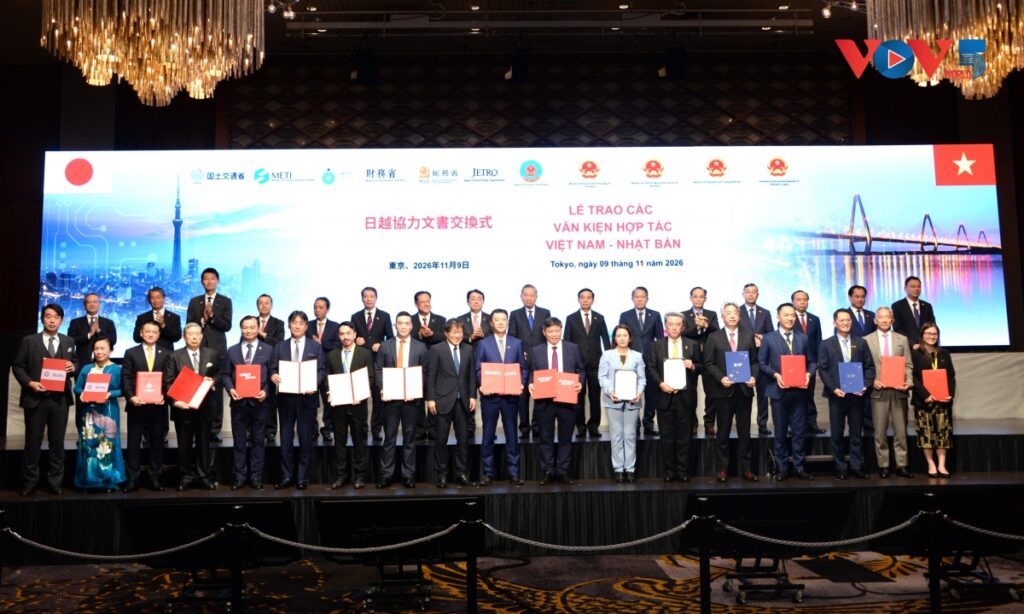
At the forum, General Secretary and President To Lam witnessed the exchange of cooperation documents between businesses and localities from both nations, as well as the announcement of the Vietnam-Japan Tourism Cooperation Year for 2027–2028.