[VOVWORLD] – Once shy and unsure of themselves because they could neither read nor write, 21 ethnic minority women in Na U border village, Sam Mun Commune, Dien Bien Province, have become literate thanks to the dedication of their teachers and the continued support of local authorities. Their newfound ability to read and write has opened up opportunities for a better life in this remote mountainous border community.
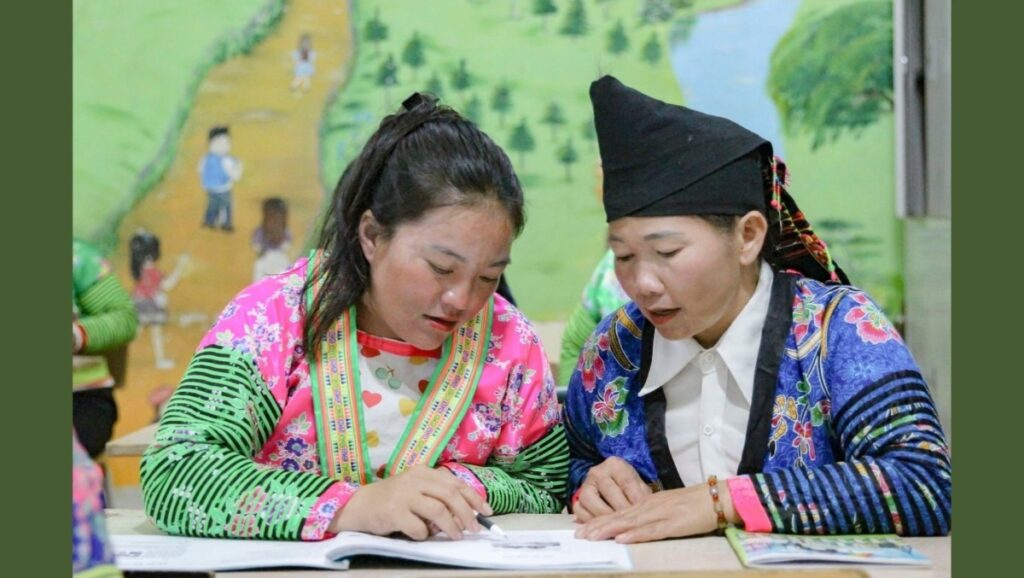
Every evening, village women put aside their daily work and gather for a special literacy class. For many, gaining literacy makes them confident and independent.
Mua Thi Ly, a Na U villager, said: “In the past, I couldn’t read or write, which made everyday life difficult. I often had to ask others for help, so I decided to attend literacy classes. Now I can write my own name and no longer have to rely on others for simple tasks.”
For villagers who have spent much of their lives working in the fields with hoes and shovels, learning to read and write is a major milestone that is transforming their lives.
Sung Thi Tau told us about her experience: “I couldn’t read messages on my phone or fill out hospital admission forms when I was ill. So I decided that, despite my age, I had to make the effort to learn to read and write.”
Nong Thi Mau, a teacher at Sam Mun Primary Semi-Boarding School for Ethnic Minority Students, is teaching women of different ages, from those in their twenties to grandmothers. She understands that literacy education requires patience, understanding, and dedication. Mau begins with the basics, offering gentle guidance and encouragement to help her students build confidence.
“At first, the women were shy and hesitant, just like children going to school for the first time. But with teaching methods tailored to their needs, they gradually made progress. Now, my students can read, write and do basic calculations. Most importantly, they have become much more confident communicating in Vietnamese with their classmates,” said Mau.
Previously, economic hardship meant that many residents of Sam Mun, particularly women, had little opportunity to attend school, leaving illiteracy rates relatively high. Nguyen Thi Quyen, the school’s Deputy Principal, has assigned experienced, dedicated teachers to lead literacy classes and arranged curricula to suit the villagers’ daily routines.
“We try to arrange flexible class schedules so that lessons do not interfere with the students’ daily lives or work. We assign dedicated, responsible teachers who are trusted and respected by local villagers. We also provide adequate facilities and all the necessary learning materials, including textbooks, notebooks and pens, to ensure that every student can attend classes,” Quyen said.
Literacy education in Na U, a border village, has also helped residents improve their livelihoods and contribute to national defense. Le Ngoc Hoan, Vice Chairman of the Sam Mun Commune People’s Committee, said that expanded outreach efforts have encouraged more villagers to take part in literacy classes.
“We have reviewed local needs and worked to enroll locals in literacy classes. Illiteracy eradication is our priority. We want people to learn knowledge and communicate in Vietnamese, and use these skills to support local socio-economic development. As a result, older men and women have registered for our literacy classes,” Hoan said.
From their first hesitant steps into the classroom to the radiant look in their eyes as they write their names for the first time, these mothers and sisters are gaining confidence and life-changing experiences through literacy. Though their journey may have started late, they are inspiring others in the nation’s border regions to envision a future of self-reliance.