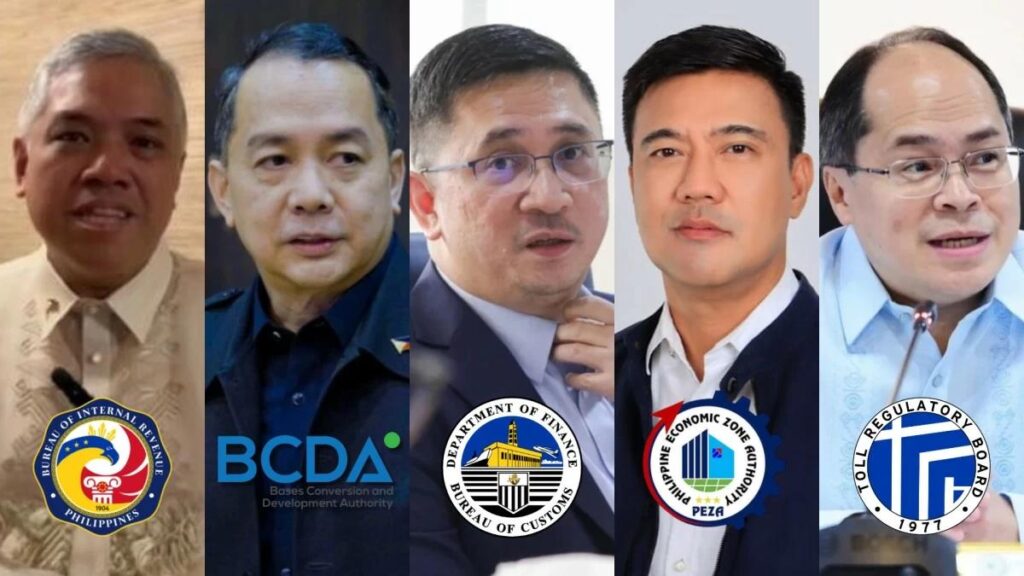
President Marcos has appointed new heads of the Bases Conversion and Development Authority (BCDA), Philippine Economic Zone Authority (PEZA), Bureau of Customs (BOC), and Bureau of Internal Revenue (BIR).
The appointments include former Customs Commissioner Ariel Nepomuceno as BCDA president and CEO, and former BCDA chief Jake Bingcang as PEZA director general.
Malacañang said the reshuffle aims to attract investments, generate more jobs, strengthen revenue collection, and improve government services by placing officials with relevant experience.
President Marcos has reshuffled key positions in his economic and revenue team, naming new heads of major investment promotion and revenue-generating agencies as part of efforts to attract more investments, create jobs, and improve government services.
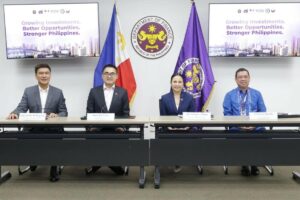
Presidential Communications Office (PCO) Undersecretary Claire Castro announced the appointments during a press briefing on Friday, Nov. 13, saying the President wants to put the right people in positions where they can deliver results for the country.
“Tamang tao, sa tamang posisyon (The right people in the right positions),” she said.
“Ang sukatan ay malinaw: mas maraming trabaho malapit sa pamilya, mas mabilis na transaksiyon, at mas maayos na serbisyo para sa bawat Pilipino (The measure is clear: more jobs closer to families, faster transactions, and better services for every Filipino),” she added.
Bureau of Customs (BOC) Commissioner Ariel Nepomuceno will take over as president and chief executive officer of the Bases Conversion and Development Authority (BCDA), which plays a key role in developing government-owned properties into investment and employment centers.
Nepomuceno, a magna cum laude graduate of the University of the Philippines, also holds an executive MBA from the Asian Institute of Management.
According to Castro, his mission is to develop land and infrastructure that would attract businesses, support economic zones, and create jobs, building on the BCDA’s experience in transforming government properties into investment hubs such as Bonifacio Global City.
Mendoza in Customs
Bureau of Internal Revenue (BIR) Commissioner Charlito Mendoza will serve as the new BOC commissioner.
A lawyer who placed third in the bar examinations, Mendoza is also a geodetic engineer from the University of the Philippines and previously led the Port of Cebu while serving as a Finance undersecretary overseeing both the BOC and BIR.
Castro said Mendoza’s priorities include strengthening revenue collection, intensifying enforcement against smuggling, and ensuring faster and cleaner movement of goods through the country’s ports to support businesses that rely on timely deliveries and shipments.
Ligon in BIR
Department of Finance (DOF) Undersecretary Rolando Ligon Jr. will take over as BIR commissioner, bringing 20 years of experience in the country’s revenue agencies.
A certified public accountant and lawyer, Ligon studied accounting at De La Salle University and law at the Ateneo de Manila University.
“His mandate is simple: to make things easier for honest taxpayers, tougher on those who evade,” Castro said, underscoring the administration’s push to simplify tax compliance while strengthening enforcement against tax evasion.
Bingcang in PEZA
In addition, BCDA president and CEO Engineer Jake Bingcang will serve as the new director general of the Philippine Economic Zone Authority (PEZA).
Bingcang, an electrical engineer with an MBA from the University of the Philippines, previously helped develop New Clark City, giving him an understanding of the requirements businesses face when establishing and expanding operations.
“His mission is to bring more investors into our economic zones and make it faster and easier for them to set up, expand, and hire Filipino workers,” Castro said.
Panga in TRB
Lastly, PEZA Director General Tereso Panga will now serve as executive director of the Toll Regulatory Board (TRB).
According to Castro, his appointment is intended to help ensure that the country’s expressways remain fair and efficient for motorists.
The administration said the appointments are part of its efforts to strengthen economic zones that attract investments, encourage businesses that generate employment, and ensure that government services deliver tangible benefits to Filipinos.