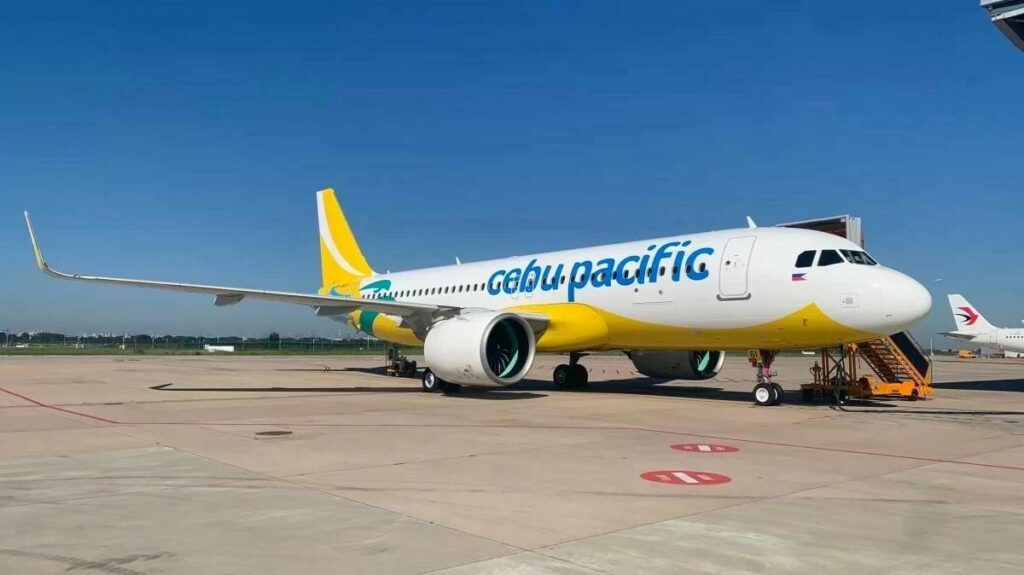
Low-cost carrier Cebu Pacific swung into the red after posting a net loss of nearly ₱13 billion in the nine months through September due to higher fuel costs and the peso’s continued depreciation.
Cebu Pacific’s parent firm, Cebu Air Inc., reported on Thursday, Nov. 12, that it incurred a net loss of ₱12.78 billion in the nine-month period, a sharp turnaround from the ₱9.47-billion net income recorded in the previous year.
The airline owned by the Gokongweis said revenues rose by 10 percent to ₱96.23 billion, driven largely by sustained demand for air travel, as reflected in the four-percent increase in passenger volume to almost 21 million.
Case in point, passenger revenues surged by nine percent to ₱65.31 billion from ₱59.66 billion in the previous year on the back of higher passenger volume and stronger yields.
Moreover, ancillary or non-ticket revenues went up by a tenth to ₱25.07 billion, while cargo revenues grew at a faster rate of 14 percent.
Still, Cebu Pacific has yet to regain its growth momentum as expenses accelerated by nearly a quarter to ₱99.23 billion from ₱79.8 billion a year ago due to higher jet fuel prices.
The airline’s fuel expenses increased by more than 62 percent to ₱39.1 billion, equivalent to 39.4 percent of operating expenses (opex), higher compared with the 30.2-percent share last year.
To manage the impact of jet fuel prices, Cebu Pacific entered into fuel derivative contracts alongside the imposition of passenger fuel surcharges that are subject to government regulations.
“Despite these measures, the group remains exposed to fuel price fluctuations and potential supply constraints. Further increases in fuel prices could adversely affect its operating margins, results of operations, and financial condition,” it said.
Apart from this, Cebu Pacific was also dealt a bad hand in terms of foreign exchange (forex) losses, which expanded to ₱5.03 billion due to the depreciation of the peso against foreign currencies.
In the third quarter alone, forex losses amounted to ₱2.57 billion, already double the ₱1.25 billion in full-year losses that the airline booked in 2025. Flying operations expenses, on the other hand, jumped by more than half to ₱13.25 billion from ₱8.53 billion last year.
Cebu Pacific Chief Executive Officer (CEO) Michael Szucs said the third quarter was a challenging period for the carrier, especially considering that broader macroeconomic pressures also affected its operations.
“Nevertheless, we are encouraged by the early results of the actions we have taken, including the return to passenger growth,” he said.
Based on data from the Civil Aeronautics Board (CAB), Cebu Pacific’s share of the domestic market increased to 63 percent in the third quarter from 55 percent in the same period last year.
Szucs said the carrier intends to build on this momentum in the fourth quarter, as many Filipinos opt to travel during this period to take advantage of the holidays.
“Looking ahead, forward bookings for the holiday season and the first quarter of 2027 are healthy, and the ongoing improvement in yields gives us greater confidence in the revenue outlook for the fourth quarter and beyond,” Szucs said.