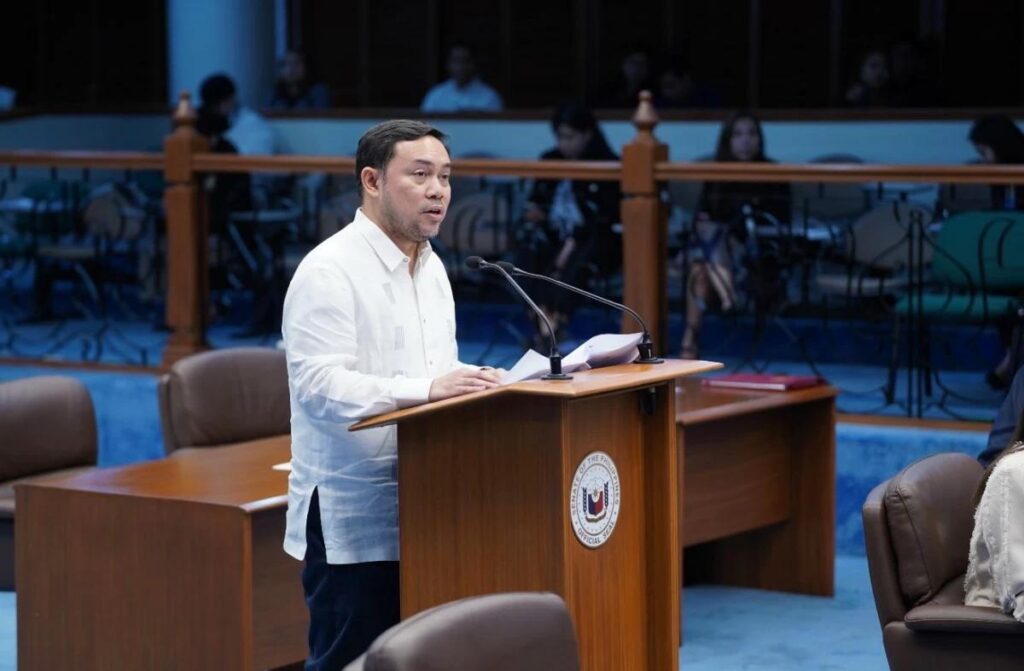
Senator Mark Villar is pushing for a more comprehensive approach to addressing unemployment and underemployment, emphasizing the need to align workforce training with industry demands, equip workers with relevant skills, and strengthen labor protections.
Mark Villar pushes comprehensive strategy to address unemployment, underemployment
Data from the Philippine Statistics Authority (PSA) showed that the country had 49.21 million employed Filipinos in July 2026. However, 3.14 million remained unemployed, representing a 6 percent unemployment rate, while another 6.33 million were underemployed.
The Congressional Policy and Budget Research Department (CPBRD) has also identified unemployment and underemployment as longstanding concerns in the Philippine labor market, pointing to the need for policies that generate sustainable employment and ensure that economic opportunities benefit more Filipinos.
Villar stressed that employment generation should go beyond increasing the number of available positions, saying workers must also have access to decent wages, stable jobs, and opportunities for professional growth.
“Hindi sapat na makalikha lamang tayo ng maraming trabaho. Dapat nating tiyakin na ang mga ito ay dekalidad, may sapat at makatarungang sahod, at nagbibigay ng oportunidad para sa pangmatagalang pag-unlad (It is not enough to simply generate more jobs. We must ensure that these jobs are decent, offer sufficient and fair wages, and provide opportunities for long-term growth),” Villar emphasized.
As part of efforts to make job opportunities more accessible, Villar has filed measures seeking to address the financial and logistical barriers faced by job seekers. Senate Bill No. 1272, or the proposed Kabalikat sa Hanapbuhay Act, seeks to provide assistance to indigent Filipinos looking for work, while Senate Bill No. 1641, or the Barangay Skilled Workers Registry Act, aims to connect qualified workers with employment opportunities in their respective communities.
He also underscored the need to help workers adapt to the growing use of artificial intelligence and automation, which are changing the skills required across various industries.
His proposed Workers’ Protection and Skills Development on Digital Economy Job Disruption Act (Senate Bill No. 649) seeks to provide stronger safeguards for workers while promoting skills development to help them navigate disruptions brought about by changes in the digital economy.
Villar likewise called for closer coordination among the Technical Education and Skills Development Authority (TESDA), schools, and private companies to make vocational and skills training more responsive to workforce requirements, particularly in manufacturing, information technology, logistics, and tourism.
He also cited the importance of extending training, livelihood assistance, and labor protection to freelancers and other workers whose livelihoods are increasingly tied to the digital economy.
Meanwhile, Villar said his Senate office would continue implementing MARKAbuhayan, its monthly job caravan, as part of efforts to bring employment opportunities directly to local communities.