Senator Panfilo “Ping” Lacson on Sunday, November 8 said the Senate will push, not only for continuous livestreaming of bicameral conference committee proceedings on the proposed P7.2-trillion national budget for 2027, but also for transcripts of the discussions.
Lacson: Senate to push for bicam transcripts, livestreaming of 2027 budget to ensure transparency
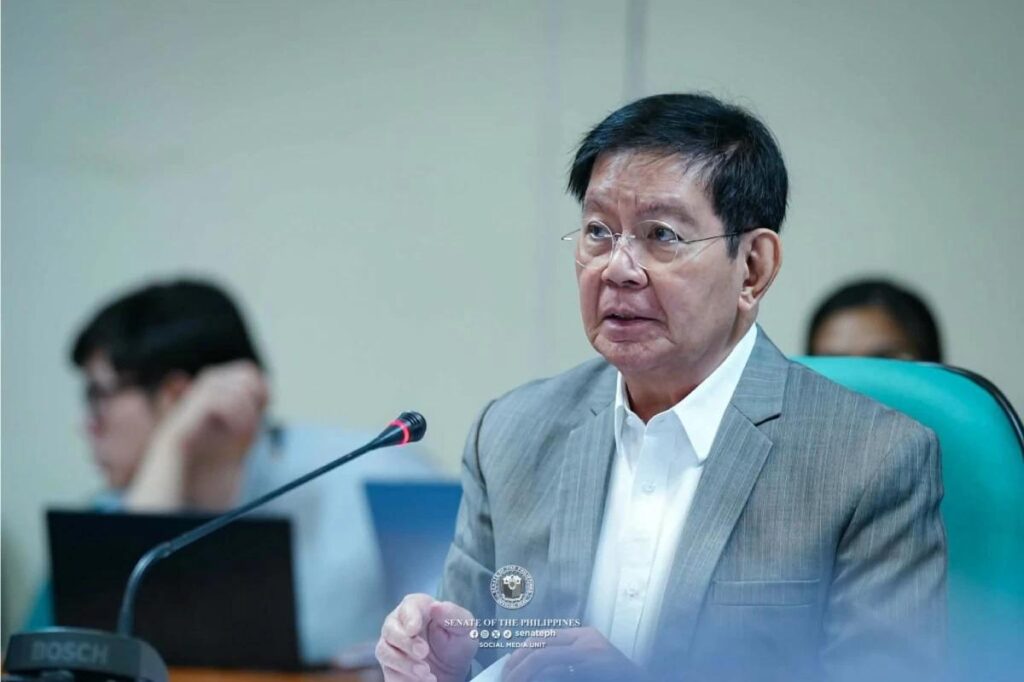
Lacson said transcripts would help expand budget transparency efforts for this year as it would help lawmakers and the public easily track and identify who initiated amendments and realignments of items in the budget measure.
“In the bicam, the minutes of the proceedings should be recorded through a transcript. The budget bill is the only measure whose bicameral proceedings do not have a transcript, so we cannot trace who made what amendment. Now there should be a transcript because for the longest time, it had none,” Lacson said in Filipino in an interview on DZMM radio.
“There should be a transcript containing the minutes so it will be clear who initiated amendments and who pushed for realignments,” he added.
Moreover, the Upper Chamber also plans to build on the transparency measures for the budget measure, notwithstanding those it implemented in last year’s proceedings for the 2026 budget.
These included identifying senators who proposed amendments to the budget bill, and posting the proceedings on the Senate’s website for the public to see.
He also said that this year, the Senate plans to invite budget advocacy groups like the People’s Budget Coalition to the bicameral proceedings to better ensure transparency
“I told the groups that vigilance is not enough and that they should resort to shaming against lawmakers who sneak in questionable realignments,” he said.
The senator cited the practice of making project insertions at two stages of the budget process, which he described as “double kill” – first in the National Expenditure Program (NEP), and again after it is transmitted to the House of Representatives and the Senate.
“Some lawmakers made insertions in the NEP, and then again when the NEP was transmitted to the House and Senate. It’s double kill,” he added.
Meanwhile, Lacson said he and his fellow senators will rely on the guidelines and requirements set by new Department of Public Works and Highways (DPWH) Sec. Giovanni Lopez for the funding of projects – including program of works, feasibility study, and geotagging.
The lawmaker also pointed that the Unified Account Code Structure (UACS) must be retained “all the way” throughout the budget process to ensure easier tracking of projects for implementation. He noted that the UACS provides codes that help track projects.
“The problem is that as the budget measure passes through the House and Senate, the UACS is lost,” he pointed out.