The United States (US) has earmarked $41 million or more than two-thirds of its $60-million grant to the Philippines to modernize electric cooperatives (ECs) and develop a financing facility to attract investments in electricity infrastructure, under a bilateral agreement aimed at improving power reliability as well as lowering operating costs.
Details of the funding allocation were contained in the Philippines Energy Threshold Program Agreement, which the US aid agency Millennium Challenge Corp. (MCC) made public last Wednesday, Nov. 4.
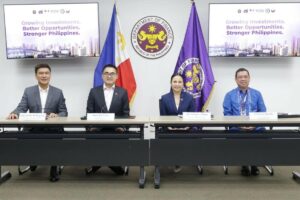
To recall, this agreement was signed by Department of Finance (DOF) Secretary Frederick D. Go and US Ambassador to the Philippines Lee Lipton last Sept. 10, on the sidelines of the Luzon Economic Corridor (LEC) Investment Forum in Manila.
Under the agreement, the $41 million will finance the Smart Utilities for Regional Growth in Energy (SURGE) initiative, which seeks to improve the operational efficiency, financial sustainability, and quality of electricity services provided by ECs nationwide.
A key component is a proposed blended finance facility designed to mobilize capital from private, public, and quasi-public financing institutions for electricity infrastructure investments, including projects that would add lower-cost power generation capacity, improve reliability, as well as strengthen cooperative resilience.
The facility will be open to all ECs, not just those selected for the program’s pilot modernization activities, while its size as well as financing mechanisms, potentially including guarantees and direct grants, will be determined following an assessment of financing availability as well as investment demand.
Investments supported by the facility will also benefit from expedited processing by the Energy Regulatory Commission (ERC), consistent with Philippine law.
However, the agreement requires the Philippine government to develop and adopt a plan for expedited ERC processing of facility-supported investments before the fifth applicable grant disbursement, unless MCC waives or defers the condition.
The agreement identified lengthy regulatory approval processes as a constraint on electricity investments, noting that financing for approved projects sometimes becomes insufficient by the time regulatory clearances are obtained.
It also acknowledged that inadequate ERC staffing has contributed to approval delays, with the regulator seeking government approval to restructure its organization and recruit additional personnel, especially engineers.
Another assumption identified in the agreement concerns the willingness of local government units (LGUs) and electricity customers to support possible rate increases, with ECs potentially seeking LGU assistance in implementing them.
However, the agreement does not prescribe electricity rate increases as a requirement for receiving assistance under the program.
Besides the financing facility, SURGE will support operational and governance reforms among selected ECs, including reducing technical as well as nontechnical system losses, improving procurement, strengthening financial and investment planning, as well as developing strategic roadmaps.
Pilot ECs will be selected by Millennium Challenge Account-Philippines (MCA-Philippines), subject to MCC approval, based on criteria including their financial condition, projected electricity demand, customer base, geographic location, and management’s willingness to improve performance.
Other considerations include proximity to economic growth corridors and the potential to reduce the universal charge for missionary electrification (UCME), which helps finance electricity supply in areas not connected to the main power grid.
The initiative also provides for targeted grid digitalization investments, including advanced metering infrastructure, supervisory control and data acquisition systems, substation upgrades, outage management tools, cybersecurity, as well as network planning software.
These investments will be implemented in two phases, beginning with assessments of participating ECs’ technological requirements, followed by procurement, installation, testing, and commissioning.
The Department of Energy (DOE) as well as state-run National Electrification Administration (NEA) and National Power Corp. (Napocor) are expected to coordinate in implementing SURGE.
The program’s monitoring framework identifies potential measures of success, including faster ERC decisions, fewer billing inaccuracies, improved outage response, as well as greater investment capacity, although several indicators still have undetermined baselines and targets.
Meanwhile, another $5 million of the US grant has been allocated to the Permitting and Approvals Reform for Efficiency (PARE) initiative, which seeks to improve the ERC’s regulatory processes through better case management, digitalized workflows, standardized requirements, as well as faster processing of applications.
The agreement also provides $1 million for the American Investment Mechanism (AIM), which will identify and develop potential projects for possible investments by the US International Development Finance Corp. (DFC).
Specific transactions under AIM will require mutual agreement between the Philippines and the US, while projects identified for possible DFC financing are not guaranteed to reach financial close.
The remaining allocations comprise $11.8 million for program management and administration, as well as $1.2 million for monitoring and evaluation (M&E).
In total, $46 million of the $60-million grant will support the Energy Development Governance Efficiency (EDGE) project, covering both the $41-million SURGE initiative and $5-million PARE.
The agreement aims to help the Philippines qualify for a larger MCC compact by supporting institutional and policy reforms intended to address constraints to economic growth.
The grant will be released in installments, subject to MCC approval of disbursement requests, satisfactory implementation progress, and other conditions under the agreement.
The Philippine government is also required to provide additional funding and resources necessary to fulfill its obligations under the agreement, including costs exceeding the grant allocation.
Under the agreement, the program is expected to be completed within four years and nine months after the agreement enters into force, unless the Philippines as well as the US agree otherwise. Grant funding generally cannot be used for expenditures incurred after the completion date without MCC approval.