Bamboo: A natural ally in the fight against climate change
MANILA BULLETIN
November 5, 2026
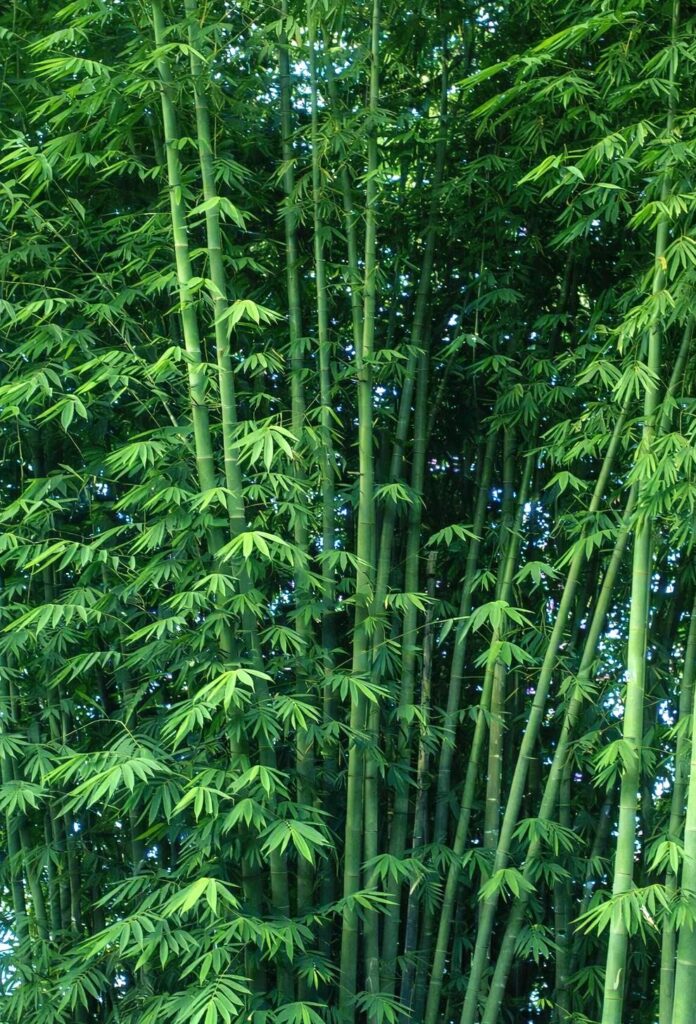
Bamboo is considered a potential solution to climate change because of its ability to absorb carbon dioxide and grow rapidly. (Photo by Henrylito Tacio)
Bamboo is considered a potential solution to climate change because of its ability to absorb carbon dioxide and grow rapidly. (Photo by Henrylito Tacio)
The world is no longer waiting for climate change; it is already living with its effects. Typhoons grow stronger, floods rise higher, landslides bury communities, droughts parch farmlands, and heat waves scorch cities. Seas creep inland, diseases spread, and coral reefs bleach into ghostly white.
El Niño and La Niña continue to disrupt food production and water supplies, adding to the challenges brought by a warming planet. The Earth is sending distress signals, and humanity is struggling to respond.
Scientists project that the global population will reach about 9.7 billion by 2050. More people mean greater consumption, more waste, and more pressure on natural resources already under strain.
“More inhabitants mean greater needs,” says Ulrich Kronberg, president of the Davao-based Mama Earth Foundation. Raw materials are being extracted “to the hilt,” he warns, and unless humanity changes course, “the world might collapse.”
Yet amid these grim forecasts, one solution stands tall, literally speaking. Experts recognize tree planting and forest restoration as important measures in addressing climate change. Some researchers have even called for planting a trillion trees.
This may sound impossible, but researchers have identified vast areas of land with potential for forest restoration. The question, however, is what kind of trees or plants countries should prioritize. For developing countries like the Philippines, one answer deserves greater attention: bamboo.
The International Network for Bamboo and Rattan (INBAR) describes bamboo as a strategic resource in addressing climate change impacts. Its former director general Hans Friederich, has emphasized the potential of bamboo species to store carbon.
Bamboo grows remarkably fast. Certain species can grow as much as 35 inches in a single 24-hour period, according to some studies. Its rapid growth, combined with its capacity to store carbon, makes it an attractive option for climate-related programs.
INBAR research shows that bamboo forest ecosystems can store an accumulated carbon stock of 200 to 400 tonnes per hectare. That is an astonishing figure, placing bamboo among the world’s most efficient natural carbon sinks. Bamboo products can also retain carbon when processed into durable materials. Friederich has noted the potential for countries to incorporate bamboo into their climate mitigation plans.
Patricia Espinosa, former executive secretary of the United Nations Framework Convention on Climate Change, has also expressed support for nature-based solutions, including bamboo. “Nature-based solutions like bamboo do not just contribute to sustainable development, they also help build the kind of world we want.”
The Philippines has a climate and geography suited to bamboo cultivation. It grows in various settings, from riverbanks and hillsides to marginal lands and backyard lots. It can also be planted in areas where other crops are difficult to grow.
The Ecosystems Research and Development Bureau (ERDB), the research arm of the Department of Environment and Natural Resources (DENR), has been studying bamboo since 1987. It maintains a bambusetum in Los Baños, Laguna, where more than 40 rare and endangered bamboo species are conserved.
From 2013 to 2014, ERDB scientists assessed the carbon content of four economically important species: bolo ( Gigantochloa levis), buho (Schizostachyum lumampas), giant bamboo (Dendrocalamus asper) and kawayan-tinik (Bambusa blumeana).
Their findings showed that bamboo stores 39.8 to 44.3 percent of its total biomass as carbon, compared with about 47.66 percent for trees. ERDB concluded that this makes bamboo a suitable component of reforestation efforts.
Carbon storage is important because carbon dioxide, a major greenhouse gas, accumulates in the atmosphere through activities such as burning fossil fuels and clearing forests. Bamboo absorbs carbon dioxide as it grows and stores carbon in its culms, roots and surrounding soil.
Beyond its environmental benefits, bamboo also has considerable economic potential. The global bamboo industry is expanding, with the Bamboo Global Report Market 2023 estimating industry revenue at $71.63 billion in 2023 and projecting it to reach $92.62 billion by 2027. Former Agriculture Secretary Emmanuel Piñol has also projected that the market could reach $99.8 billion by 2031.
The Philippines has about 104,000 hectares of bamboo, generating an estimated $60 million annually. These figures suggest considerable room for expansion, provided the industry receives adequate support.
Despite its promise, bamboo remains underutilized. “Many decision makers have not yet taken account of this resource,” Friederich has lamented. Yet bamboo could help low- and middle-income countries pursue their sustainable development goals while creating livelihood opportunities.
Jethro P. Adang, director of the Davao-based Mindanao Baptist Rural Life Center, points out that bamboo grows well on marginal lands, including areas often neglected or abandoned. “It is a pity that we have neglected this important crop for so long,” he says.
Bamboo is also useful in soil and water conservation. Its dense root system helps prevent soil erosion, stabilize riverbanks, and reduce sedimentation. Dr. Henry A. Adornado, ERDB executive director, has described bamboo as “the best conservation material” because it requires relatively low maintenance and offers economic returns.
Growing bamboo requires considerable labor, particularly during the first two years, when labor accounts for about 90 percent of production costs. Once established, however, a bamboo plantation can provide a long-term source of income. As one grower puts it, “If the bamboo survives, you are assured of money for the next 30 to 50 years.”
Bamboo also has several commercial uses. It can be harvested without killing the plant, allowing new shoots to grow. Depending on the species and growing conditions, it can mature in three to five years, much faster than many hardwood trees. Its uses range from construction materials, furniture, handicrafts, textiles, and paper to bioenergy and food products such as bamboo shoots.
Climate change is accelerating, and the Philippines, one of the world’s most climate-vulnerable countries, cannot afford to overlook practical solutions. Bamboo offers a combination of rapid growth, carbon storage, soil protection and livelihood opportunities.
It is not a replacement for natural forests or the need to protect existing trees. Nor can planting bamboo alone solve the climate crisis. But it can be an important part of a broader reforestation and climate action program, especially in areas where it is suited to local conditions.
Perhaps the answer has been growing around us all along, on hillsides, along riverbanks and in neglected corners of farmland. Bamboo does not demand much. It needs to be planted, properly managed and given the opportunity to provide what it has long offered: carbon storage, soil protection, useful materials and income for communities.