‘It’s not a sacrifice’: Angelina Jolie explains why she’s stepping back from high-profile life


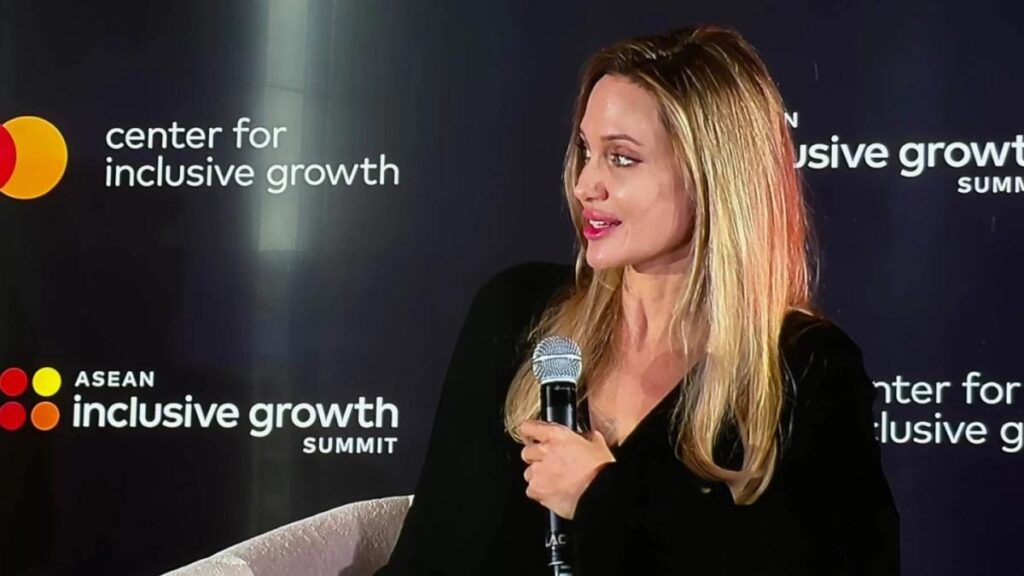
American actor and humanitarian Angelina Jolie wants to step back from high-profile demands to pursue a simpler life focused on family, community service, and cross-cultural initiatives.
“In 10 years, I don’t know,” Jolie said when asked about her future outlook during the ASEAN Inclusive Growth Summit on Wednesday, Nov. 11. “When you’re a parent, you just want to be here, and you just want everyone healthy, and you feel like everyone’s okay and you’re okay. So I want to have an even more simple life, pass things to my children, live more simply.”
Jolie also outlined plans to transition her personal endeavors to the next generation while deepening her commitment to sustainable development and art residencies over the coming decade.
“I hope to separate even more from certain things and be traveling, being a part of this beautiful international community and this world and watching the next generation come together,” she said. “It’s not a sacrifice to live a life for others. It’s a great joy.”
Jolie’s deep ties to Southeast Asia began a quarter-century ago when she traveled to Cambodia to film on location. Two years later, while volunteering at a local school, she experienced a moment that led to adopting her son, Maddox.
“I had this thought as clear as day that my son is here, and I have to find him,” Jolie recalled. “Then I met Maddox. And so I purchased a little part of the country, a tiny, heavily mined part of the country up on the border—the first and last stronghold of the Khmer Rouge.”
The land, where crews initially cleared 48 landmines, eventually grew into a conservation foundation and her permanent international residence, where she has lived for 23 years. Her conservation work later expanded from clearing explosives to combating illegal gem mining, poaching, and deforestation, as well as establishing local sustainable industries such as beekeeping.
Beyond her environmental work, Jolie highlighted her collaborative partnership with acclaimed Cambodian filmmaker Rithy Panh, whom she met while directing the film First They Killed My Father.
The pair are now joining forces to launch a broader cultural initiative in Cambodia aimed at restoring historic structures, preserving local heritage, and establishing a global creative residency.
“Rithy and I have been talking a lot,” Jolie said. “We’re coming together to look at doing a kind of bigger cultural program together where we can restore some of the buildings, some of the old theaters… and use my home as a residency, invite people to come out and spend time.”
Jolie stressed that international development models must shift away from traditional short-term relief toward long-term investments that honor the economic and cultural wealth of local communities.
“You want to find a way where it goes from aid relief to really just investment, so people are taking care of themselves and don’t need you, and you’re investing in their independence,” Jolie noted.
This philosophy inspired her latest global venture, Atelier Jolie. The brand launched its first hub in New York and is designed to expand to locations worldwide, including Cambodia. The model reserves at least 70 percent of its spaces and programs for local artisans, creators, and products, with the remaining 30 percent dedicated to international exchange.
“These are not poor cultures. These are not poor countries,” Jolie said. “These are rich countries, strong people, brilliant people, rich resources, nature, capacity. But being treated as if they would just be kept in this state of dependence.”
Looking ahead, Jolie expressed optimism about the role of the next generation in bridging cultural divides through art, local commerce, and positive technology, emphasizing her goal to cultivate a more interconnected and self-sustaining global environment.