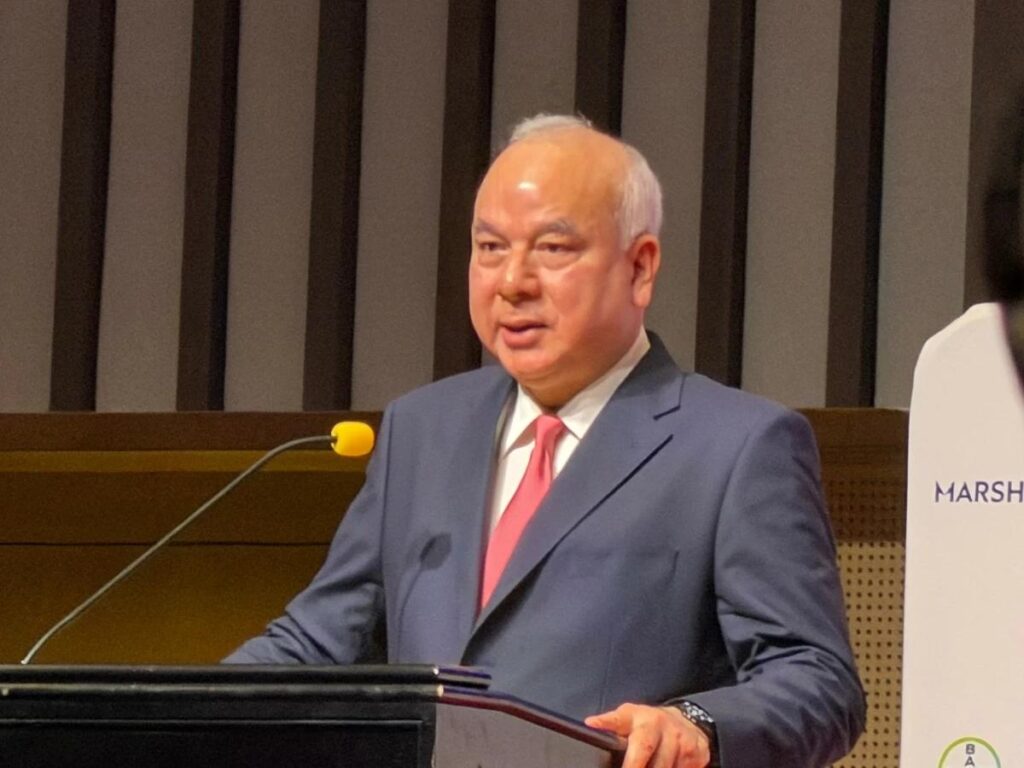
Many ASEAN nations growing old before growing rich—Sultan Nazrin
MANILA BULLETIN
November 11, 2026
KUALA LUMPUR, Malaysia — Many member states of the Association of Southeast Asian Nations (ASEAN) are growing old before growing rich, Perak Sultan Nazrin Shah said during the Silver Economy Forum 2026 at the Kuala Lumpur Convention Centre on Wednesday, Nov. 11.
This, as he urged stronger healthcare, housing, and support systems to help people age with dignity regardless of wealth.
Sultan Nazrin said the region’s rapidly aging population is leaving countries less time to prepare for the needs of older people.
“Our regional demographic transition is moving at a pace far swifter than that historically experienced by the West. We face an unprecedented and sobering paradox: many ASEAN nations are growing old before they grow rich,” he said.
He noted that roughly one in nine people in Southeast Asia was aged 60 or above in 2020. By the middle of the century, that proportion is expected to rise to one in five.
While the shift puts pressure on public finances and families, Sultan Nazrin said it likewise gives the ASEAN an opportunity to build systems suited to longer lives.
“We have the opportunity to build from the ground up, designing modern systems that harmonise with our enduring traditions of family solidarity and community responsibility,” he said.
“We need not inherit the flaws of an old world; we have the freedom to design one that is fit for purpose from the outset.”
The sultan stressed that efforts to promote healthy aging must reach those with limited resources.
“Healthy ageing cannot become a commodity available only to those who can afford it,” he said.
“If a longer, healthier life is one of the crowning achievements of modern civilisation, then the fruits of that achievement must not depend upon the balance of one’s bank account.”
He called for services, environments, and technologies that expand access instead of worsening existing inequalities.
“The ability to age with health, dignity and purpose should never be determined by wealth,” he said.
Beyond extending life expectancy, Sultan Nazrin said countries must ensure that additional years are lived in good health.
He underscored that preparations should begin long before old age, warning that options become more limited once frailty has developed.
“The foundations of healthy ageing do not begin at sixty; they are laid in the choices made decades prior,” he said.
Sultan Nazrin urged governments to address housing, healthcare, financial security, and technology as connected concerns, with communities designed to help older people remain active and independent while receiving greater support as their needs change.
He challenged the traditional model of education, work, and a brief retirement, describing it as “obsolete.”
In Malaysia, he said, a person reaching 60 can expect, on average, another two decades of life.
“Twenty years is not a footnote; it is not an epilogue. It is a substantial, meaningful epoch of human experience,” he said.
As such, he cautioned against viewing older people solely as a financial burden, pointing to their accumulated knowledge, institutional memory, and capacity to mentor others.
“We must never treat age and dependency as synonymous. They are not,” he said.
Returning to the venue where ASEAN leaders adopted the Kuala Lumpur Declaration on Ageing nearly 11 years ago, Sultan Nazrin urged the region to carry its commitments forward.
“Let us therefore judge our progress not merely by the years we add to a life, but by the life we are able to bring to those years,” he said.
The Silver Economy Forum 2026, jointly organized by the Global Coalition on Aging and the Malaysian Healthy Ageing Society, runs from Nov. 11 to 12 in Kuala Lumpur under the theme “Healthy Longevity for Economic Growth.”