Executive Secretary Ralph Recto has ordered government agencies and local government units (LGUs) to identify communities most vulnerable to El Niño and prioritize assistance ahead of the expected stronger effects of the dry spell in January 2027.
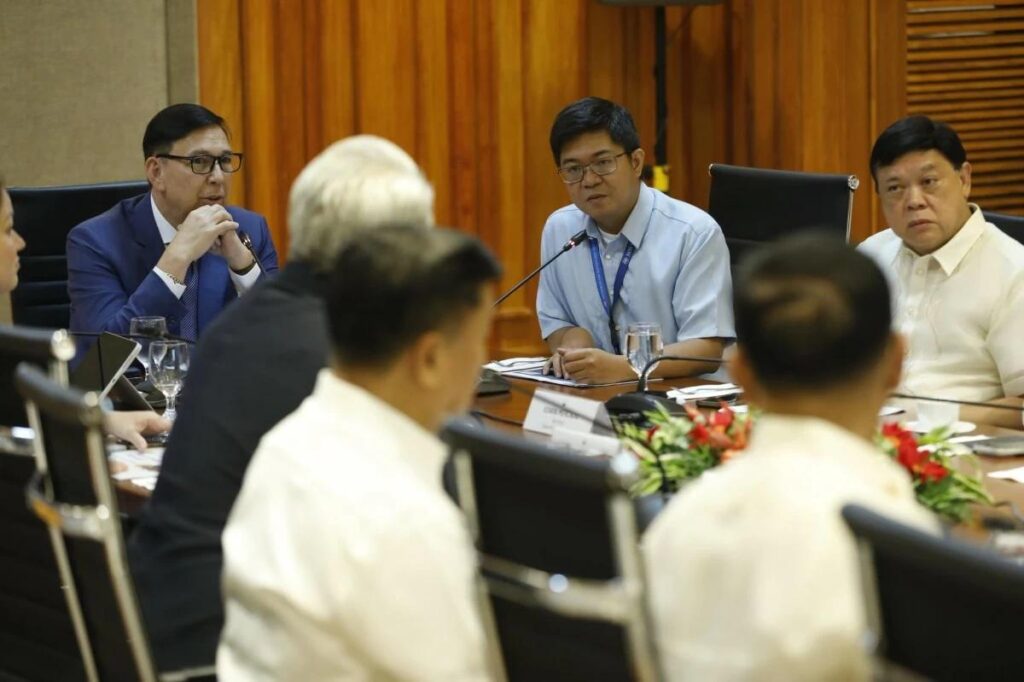
Acting on President Marcos’ directive, Recto led a meeting with key government agencies and local officials on Nov. 4 to coordinate preparations and ensure adequate supplies of water, food, and electricity.
“Mararamdaman ang El Niño sa buong bansa, pero iba-iba ang magiging epekto nito sa bawat lugar. May komunidad na tubig ang pangunahing problema. Sa iba, kuryente o matinding init (El Niño will be felt across the country, but its effects will vary from one area to another. In some communities, water will be the main problem. In others, electricity or extreme heat),” he said.
“Kaya dapat alam natin kung sino ang pinakananganganib at anong tulong ang kailangan nila (That is why we must know who is most at risk and what assistance they need),” he added.
Recto directed agencies to prepare maps identifying areas likely to experience water shortages and extreme heat so the government can determine where to deploy assistance and equipment first.
Pampanga and Cavite are among the areas being monitored for possible water supply problems, while Recto asked local government leagues to identify their members’ needs, including generators, solar power systems, and water storage facilities.
He also expressed openness to reviewing the priorities of the Local Government Support Fund to help LGUs finance their preparations.
The Metropolitan Waterworks and Sewerage System (MWSS) reported that Angat Dam’s water level stood at 208.70 meters on Nov. 3, above its minimum operating level of 180 meters.
Despite the current supply level, the government is preparing alternative water sources, tighter dam management, and conservation measures, while encouraging private companies to help improve water systems in communities near their operations.
The Department of Health will also help LGUs assess new water sources to ensure they are safe for drinking.
For electricity, the Department of Energy is intensifying power plant maintenance, expediting permit processing, and ensuring adequate reserves of fuel and other power-generation resources, while expanding battery storage and energy-conservation measures.
The government is also prioritizing uninterrupted electricity supply to hospitals, schools, and water facilities, particularly during periods of extreme heat.
Farmers, food supply assistance
The Department of Agriculture assured that food supplies remain adequate and said it would continue monitoring prices of basic commodities, particularly rice.
The government is also expanding solar-powered irrigation systems with the National Irrigation Administration to help farmers sustain production despite reduced rainfall.
Recto directed agencies to streamline and expedite the release of fuel subsidies to farmers and fisherfolk to ensure prompt assistance.
The Department of Social Welfare and Development and the Department of Labor and Employment are preparing temporary employment and other forms of assistance for workers and families whose livelihoods may be affected, while the DSWD’s Emergency Cash Transfer program may provide direct aid to households affected by disasters and other crises.
Protection for students, workers
The Department of Education said Executive Order No. 130 would provide a clearer basis for decisions on suspending or resuming classes based on actual local conditions.
The government is also pursuing solar power projects for schools and improvements in classroom ventilation and cooling, while the Department of Health will work with LGUs to identify residents most vulnerable to extreme heat, including older people, children, and those with illnesses.
Barangay health workers will help monitor and regularly visit residents who need special attention.
LGUs to take active role
Recto emphasized that a single national plan would not suffice, as provinces, cities, and municipalities face distinct risks and require tailored interventions.
He said local officials must help identify problems that require immediate attention and the equipment their communities must prepare for.
Among those who attended the Nov. 4 meeting were Union of Local Authorities of the Philippines president and Quezon City Mayor Joy Belmonte, League of Cities of the Philippines president and San Juan City Mayor Francis Zamora, League of Municipalities of the Philippines national president and Mayor Faustino “Inno” Dy V, Vice Governor Francis Faustino “Kiko” Dy, and Liga ng mga Barangay national president Jessica Dy.
Also present were Interior and Local Government Secretary Jonvic Remulla, Social Welfare Secretary Rex Gatchalian, Health Secretary Edwin Mercado, Transportation Secretary Vince Dizon, Public Works Secretary Giovanni Lopez, Labor Secretary Francis Tolentino, and Presidential Communications Office Secretary Lino Cayetano, along with representatives of other government agencies.