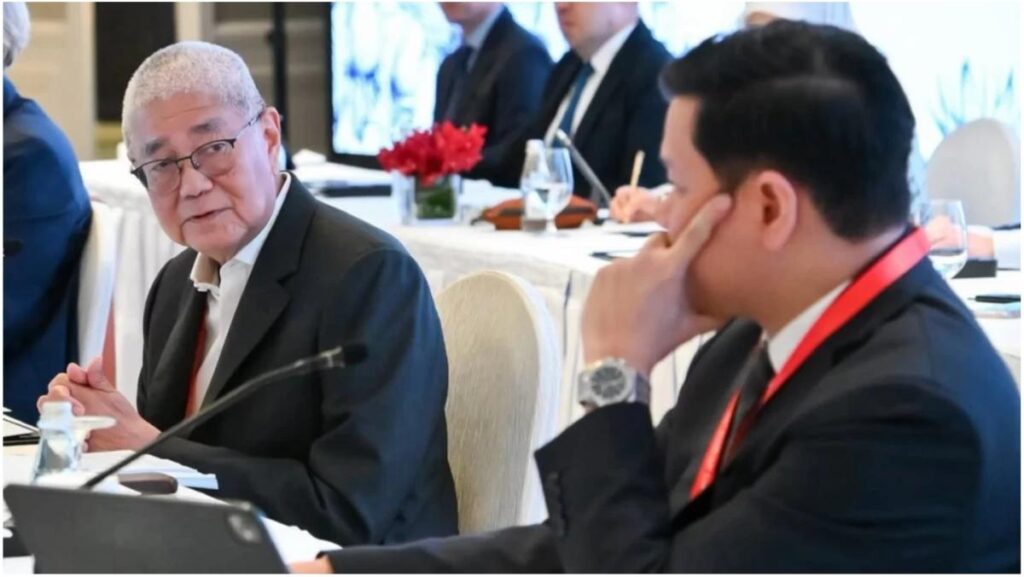
Bangko Sentral ng Pilipinas (BSP) Governor Eli M. Remolona Jr. said a pause in interest rate hikes is unlikely in December, even amid disappointing growth in the third quarter, as it will take some time for the economy to absorb the interest rate increases.
Instead of looking at monetary policy, Remolona told reporters during an informal chat last Monday night, Nov. 23, that the domestic economy currently warrants improved government spending, the contraction of which since the eruption of the flood control scandal in 2025 has also been choking the economy.
Remolona said monetary policy has a delayed pass-through, pointing instead to fiscal measures.
“What is needed to support growth now, and the government understands this, is fiscal stimulus,” Remolona said, stressing that growth has suffered because of muted public construction and contracting gross capital formation.
According to the BSP chief, the government is “trying very hard to revive public construction,” calling it an “unintended consequence” of the flood control scandal last year involving high-profile contractors and Department of Public Works and Highways (DPWH) officials.
Overall, Remolona said government spending on consumption is holding up but pointed out the sharp declines in infrastructure spending.
Government infrastructure spending continued to lag through the first eight months of 2026, as infrastructure and other capital outlays fell by more than a third to ₱522 billion as of end-August from ₱798.4 billion in 2025.
Key borrowing costs have been raised to 5.5 percent through an outsized half-point hike in October.
Remolona said the policy-setting Monetary Board (MB) will “tighten as much as we need to,” adding that a return to the easing cycle will only happen if inflation cools back close to the three-percent target.
His hawkish stance remains hinged on future inflation readings, not on current inflation rates. Headline inflation surged to a nearly four-year high of 7.8 percent in October, with core inflation accelerating to a more than three-year high of 5.4 percent.
Remolona also brushed off stagflation as a label for the toxic mix of anemic growth, overheating prices, and an elevated unemployment rate. He acknowledged that inflation is high, given that it has been sitting well above the four-percent target ceiling, but argued that growth remains out of negative territory.
He believes “slowflation” sounds more fitting than stagflation but noted that it could fall under the category if growth slows below a certain level, a threshold President Ferdinand R. Marcos Jr. has yet to assign.
Domestic growth sharply slowed to 2.1 percent in the third quarter from four percent a year ago, marking a fresh post-pandemic low. Growth averaged 2.5 percent in the first three quarters of 2026, falling short of the minimum growth target of 3.5 percent.
Remolona revealed that the BSP was also taken aback by the slow gross domestic product (GDP) outturn, adding that the central bank had expected a higher figure of 3.5 percent.
Growth in the last three months of the year is still expected to pick up from the successive slumps. “We’re still hoping that investment can pick up. I hope it’s positive,” Remolona said, adding that the local economy could manage to eke out at least a three-percent growth rate.
Meanwhile, Remolona said the “best solution” to the wave of business closures is resuming government spending on infrastructure. “Infrastructure is a bigger multiplier of investment than consumption,” he said.